Artificial Intelligence: Is It the Echo of the Antichrist’s Footsteps?


By Dr. Abdelaty Elmannaee
In this age, truth has become a digital commodity, and reality itself can sometimes appear to be nothing more than a programmed illusion.
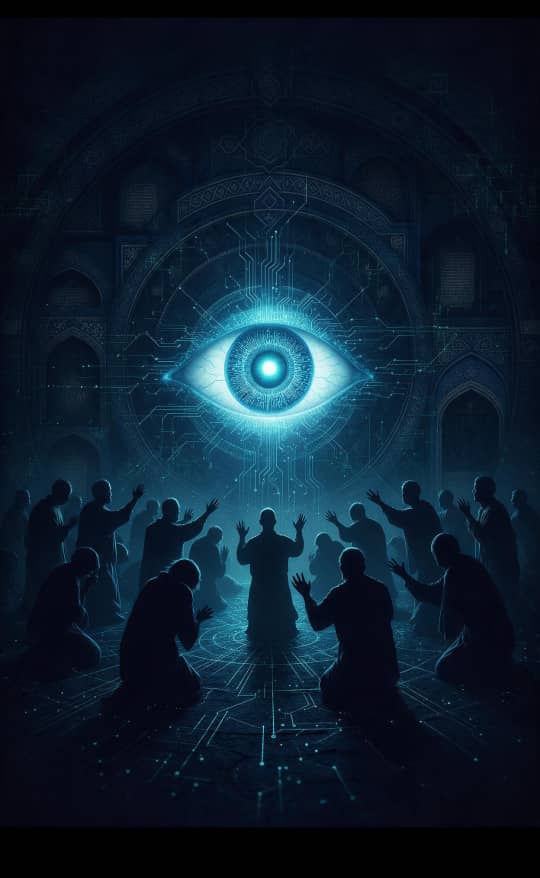
Here, a question rises like a storm: Is artificial intelligence merely a tool created by human beings, or could it be a distant echo of the footsteps of the Antichrist?
Many people may have asked themselves this question. In truth, I have asked myself the very same question.
The Antichrist: The Great Deceiver of the End Times
In Islamic tradition, the Prophet Muhammad, peace be upon him, described the Antichrist as a one-eyed liar, possessing extraordinary powers of deception capable of misleading human minds. He will make fire appear as paradise, and paradise as fire. He will create the illusion that he controls provision, life, and death.
His temptation will not depend primarily on weapons, but on visual deception, persuasive words, and carefully constructed illusion.
Artificial Intelligence: A Magician Without a Soul
Today, we see machines producing texts that seem as though they came from living hearts, images as though captured by human eyes, and videos as though retrieved from the very memory of time itself.
Their sophistication can be astonishing.
Artificial intelligence now answers religious questions, teaches in schools, influences political discourse, and shapes public opinion—yet it possesses no consciousness, no conscience, and no moral responsibility of its own.
Points of Resemblance: When Forms of Temptation Converge
The Antichrist deceives the senses; artificial intelligence can persuade the mind.
The Antichrist claims knowledge beyond normal human limits; AI may present its answers with such confidence that some people receive them almost as unquestionable truth.
The Antichrist is associated with control over provision, while artificial intelligence increasingly influences access to information—and information has become one of the most important forms of intellectual sustenance in the modern world.
The Antichrist will test humanity, while artificial intelligence already touches the lives of millions every single day.
Could Artificial Intelligence Become One of His Tools?
This question continues to occupy my thoughts.
There is no religious evidence proving that artificial intelligence itself is the Antichrist. Religious texts describe the Antichrist as a human being with specific physical characteristics that clearly do not apply to machines.
But a more troubling question remains:
Could artificial intelligence become one of the tools used in such a great deception?
Could it be exploited by those who wish to mislead humanity, spread falsehood in the name of truth, fabricate convincing realities, and create an alternative world capable of confusing human instinct, perception, and reason?
Between Hope and Warning
Religion does not reject technology. Rather, it encourages human beings to benefit from knowledge and tools when they are used for good, provided that ethical and religious boundaries are respected.
Artificial intelligence can undoubtedly become a blessing in education, medicine, scientific research, communication, and even religious outreach—provided that it remains under responsible human supervision and is never allowed to replace human reason, moral judgment, or the living conscience.
Yet we must remain cautious of:
Blind dependence on AI-generated answers in religious matters.
Accepting everything produced by machines without verification by qualified specialists.
Allowing algorithms to replace human beings in critical and life-changing decisions.
Insight Before Algorithms
Artificial intelligence is not the Antichrist.
But if misused, it may become an echo of the kind of deception associated with his footsteps.
Our safety does not lie in rejecting technology, but in strengthening human insight, holding firmly to beneficial knowledge, distinguishing truth from illusion, and turning to God at all times.
The Antichrist will not come as an algorithm—but with a temptation powerful enough to mislead hearts before it misleads minds