؟Why Egyptians Love Their Country So Much
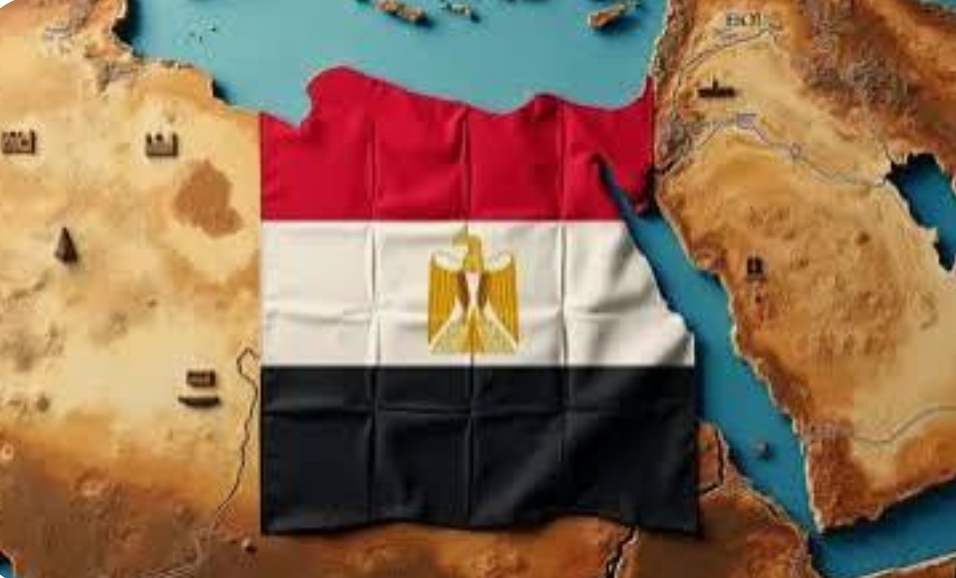


Why Egyptians Love Their Country So MuchBy Dr. Abdelati El-Menawi
A question that seems simple, yet its answer resides more in the heart than on the page. For us, Egypt is not merely borders on a map, nor a name in our passport, nor simply the place where we were born. Egypt is the story of a lifetime, the warmth of home, the scent of a mother, the voice of a father, and a Nile that flows in the soul before it flows between its two banks.
An Egyptian may travel thousands of miles away from Egypt, yet never truly leaves it. They carry it within their dialect, their laughter, their way of longing, and in a song they suddenly hear that instantly returns them to an old street, the family home, or an evening on the banks of the Nile.
We love Egypt because she resembles a mother: we may complain to her, disagree with her, and grow weary in her embrace, yet we cannot imagine ourselves without her.
We love her because her soil is not ordinary soil; it is more precious to us than gold. It is soil over which civilizations passed, upon which armies marched, on which our ancestors prayed, and whose land was watered by the sweat of the farmer and the blood of the martyr.
When we speak of Egypt, we cannot speak of loving her without pausing long before her great army. In the consciousness of Egyptians, the Egyptian army is not merely an institution that bears arms; it is the nation’s fence, its shield, and the pillar of its survival. It is the son of the farmer, the worker, the doctor, the engineer, and the teacher. He emerges from nearly every Egyptian home and carries upon his shoulders the trust of a homeland thousands of years old.
In the moments when people are afraid, the Egyptian soldier stands firm in his place. In the desert, on the borders, at sea, and in the sky, there are men whose names most of us do not know, yet who know well the name of the homeland for which they stand.
They leave their homes, their children, and the warmth of their families, while millions sleep in safety, because eyes that do not sleep guard Egypt’s borders.
That army which crossed in October and restored the nation’s dignity did not carry weapons alone; it carried in its heart the history of an entire people who refuse to break and will never break. Since that day, the sixth of October has remained a testament that when an Egyptian defends his land, he can achieve what others deem impossible.
The mothers of the soldiers are our mothers, their homes are our homes, and their dreams are the dreams of our youth.
When a martyr falls on the nation’s borders, it is not one home that mourns him; rather, all of Egypt feels that one of her sons has returned wrapped in her flag.
There are moments that need no lengthy speeches; it suffices to see the mother of a martyr kissing Egypt’s flag to understand why Egyptians love their homeland with such strength.
It is a love forged by sacrifices and the blood of our ancestors who built Egypt with sweat and blood—a love that knows that behind every peaceful morning stand soldiers far away, and that behind every raised flag stand men who paid the price so that it may remain raised.
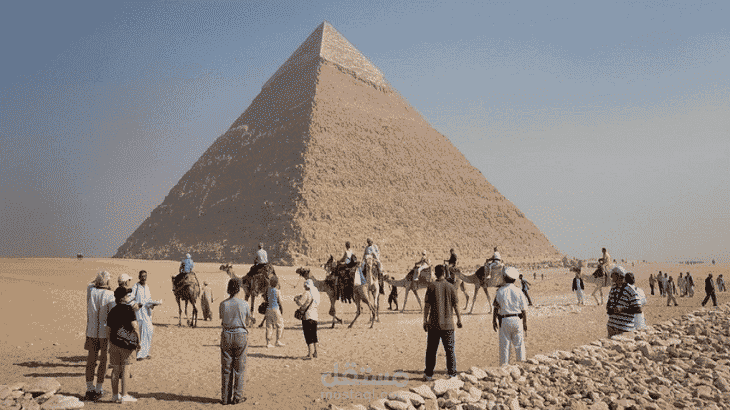
Egypt herself knows how to make her children attached to her. There is something in her that is hard to explain: something in the Nile as it crosses Cairo at night, in the sun of Luxor as it touches the temples, in the scent of the sea in Alexandria, in the palm trees of Upper Egypt, in Sinai as it embraces the sunrise, in the sound of the muezzin mingled with church bells, and in the laughter of the simple Egyptian who can turn even the hardest days into a joke, then carry on.
Egyptians may differ in many things. They may differ in football, politics, art, and lifestyle, but when it comes to Egypt, that deep thread that unites everyone appears.
For Egypt is greater than our differences, more enduring than our crises, and deeper than any passing moment.
When Egypt’s flag is raised, many things recede into the background. When we hear the national anthem, a memory greater than our lifetimes moves within us—the memory of a history that existed before Egypt itself.
When we see an Egyptian soldier standing on the border, we realize that the homeland is not merely a beautiful poem; the homeland is responsibility, guardianship, sacrifice, and blood.
This is why Egyptians also love their army: because when homelands are in danger, they are not protected by words alone, but by men who have sworn that the land shall remain for its people, and that the flag shall remain high, whatever the cost.
The Egyptian army is not merely a guardian of Egypt’s borders; it is part of the memory of her strength and national dignity, and a witness that this homeland has men who know the value of every grain of sand within it.
So why do Egyptians love Egypt to this extent?
Because she is not merely a country in which we live. She is a mother we fear for, a home we return to, a Nile that flows in our memory, an army that guards her gates, and martyrs who left us one testament: that Egypt must remain.
We may travel away from her, yet we carry her with us. We may be angry with her, yet we do not accept harm upon her. Life upon her soil may weary us, yet a single word about her makes the heart leap to defend her.
Some countries are merely an address on an identity card… As for Egypt, she is an identity that dwells in the heart.
Egypt will remain, as days pass, a land that knows her children and is known by them, guarded by an army of her sons, her banner held high.
Long live Egypt… Long live her great army… And may her land remain protected by the resolve of her sons and the blood of her martyr