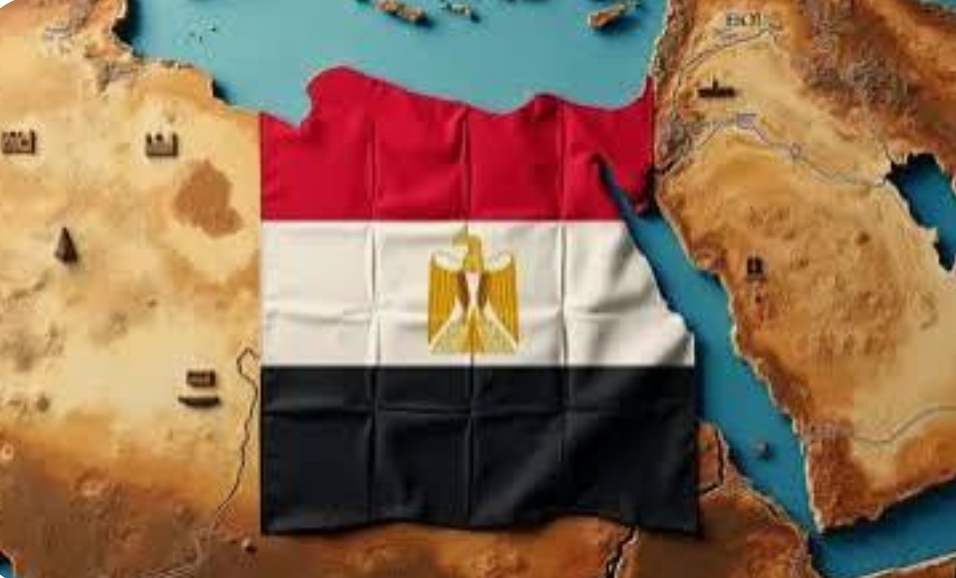
Egypt’s Red Lines… When the State Speaks the Language of Existence
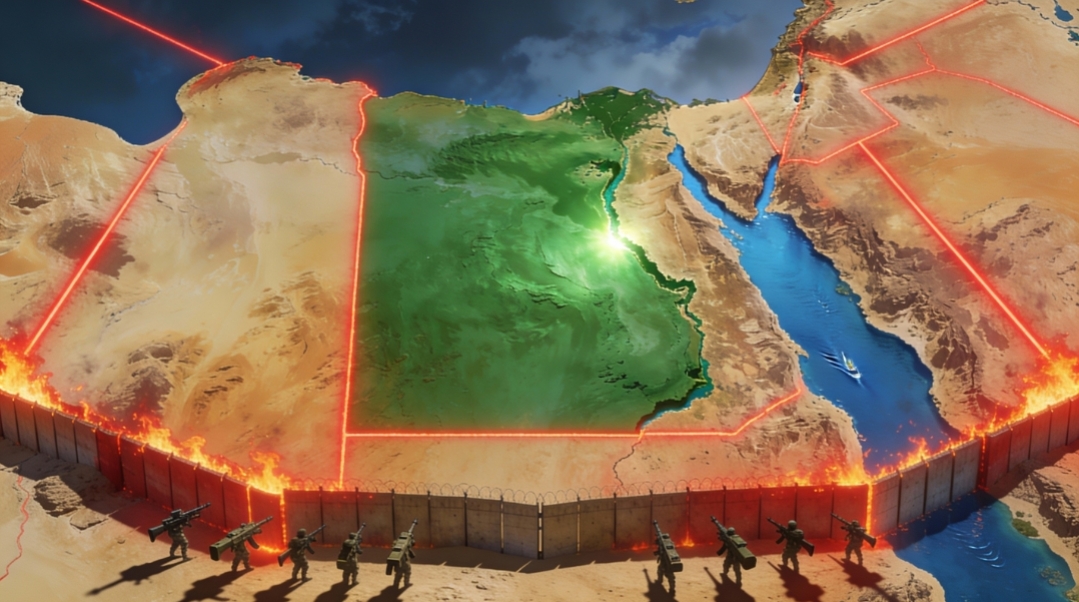


The Egyptian Army Guards History… and the President Reads the Future
Egypt has never been a state of impulsive reactions, nor an entity shaped on the margins of geography or under the pressure of fleeting moments. This is a country forged by thousands of years of civilization—one that knows precisely when to remain silent, when to speak, and when to raise its hand not for aggression, but for warning.
It is no secret that the Egyptian Army—the oldest standing army on Earth—has never been merely an instrument of war. It has always been the mind of the state and its final shield: the silent guardian of the nation’s borders and its very meaning. Behind it stands a wise political leadership that understands national security is not managed by slogans, but by a delicate balance between power and wisdom—applied at the right moment.
Within this context came the “red lines” announced by President Abdel Fattah El-Sisi on highly complex regional files—not as threats, but as a clear declaration of non-negotiable constants, and a message that Egypt knows its limits… and also knows how to defend them.
First: The Nile Water Line… When Water Becomes a “Matter of Existence”
The Nile River has been Egypt’s lifeline since the dawn of history. It has never been merely a water resource, but a pillar of civilizational, demographic, and economic existence. Hence Egypt’s position has been firm and decisive: Egypt’s historical rights to the waters of the Nile are a red line that cannot be compromised or diminished.
With the escalation of the Grand Ethiopian Renaissance Dam crisis and other upstream projects, the Egyptian state has repeatedly affirmed—at the highest levels—that any infringement on Egypt’s water share constitutes a direct threat to national security, and that Cairo’s patience in negotiations does not mean acceptance of a fait accompli.
This red line is not a temporary stance, but a doctrine of statehood, clearly articulated by President El-Sisi when he described water as a “matter of life or death.” It was a message the world understood well: Egypt does not oppose development, but it refuses for the development of others to be built upon the thirst of its people.
Second: The Libya Line (Sirte–Jufra
When Geography Touches National Security
In 2020, President El-Sisi clearly declared that the Sirte–Jufra line was a red line that could not be crossed. This was not a show of force, but a profound strategic reading of the geography of danger.
Libya is not just a neighboring state; it is a direct strategic depth for Egyptian national security. Its long western border means that any chaos within Libya poses an immediate threat to Egypt. Hence, this red line was linked to preventing the advance of militias and foreign-backed forces toward eastern Libya.
This declaration succeeded in reshaping the Libyan landscape and proved that when Egypt speaks clearly, it creates a balance that militias cannot
Third: The Gaza and Sinai Line… No to Displacement, No to Compromising Egyptian Security
With the escalation of the war on Gaza, scenarios of forced displacement returned to the forefront, accompanied by attempts to tamper with the Philadelphi Corridor and the security arrangements in Sinai. Here, Egypt’s position was unequivocal: the displacement of Palestinians outside Gaza—especially into Sinai—is a red line.
This stance is driven not only by national security considerations, but by a moral and political vision that rejects the liquidation of the Palestinian cause through displacement—form and substance alike.
Sinai is not an alternative arena for others’ crises; it is Egyptian land, for which precious blood has been shed. Its security is an inseparable part of the state’s sovereignty. Egyptian leadership has emphasized that any breach of this equation constitutes a direct threat to national security and will not be permitted under any pretext.
Fourth: Sudan’s Red Lines… When Egypt Protects the State, Not the Parties
Egypt has clearly declared red lines in the Sudanese file, reflecting a deep understanding of the imminent threat facing the Sudanese state itself. These red lines include:
Preserving the unity of Sudan and rejecting any partition scenarios.
Rejecting the creation of parallel armies or entities outside legitimate institutions.
Safeguarding national state institutions from erosion or dismantlement.Egypt explicitly affirmed its right to take “all necessary measures” under the Joint Defense Agreement, in a clear message that Sudan’s stability is not an isolated internal matter, but an integral part of Egyptian and Arab national security.
This position does not favor any party; it favors the concept of the state itself. For the collapse of Sudan would mean opening the floodgates of chaos across the entire region.
The Red Line… A State Philosophy, Not a Ruler’s Whim
Egypt’s red lines are not fleeting military threats, but a political translation of a state philosophy that knows its weight, its boundaries, its responsibilities, and its capabilities. They are lines drawn to prevent descent into chaos, to protect national security without recklessness, and to affirm that Egypt does not seek confrontation—but will not accept a reality imposed upon it that undermines its existence, security, or dignity.
When Egypt speaks this language, it speaks not only on behalf of the present, but on behalf of history—and of generations yet unborn, who deserve a secure homeland that knows where it stands, and when to say: This far… and no further. This is a red line. Whoever comes close does so at his own peril.