Egypt… When Diversity Becomes the Source of Greatness


An Important Line…
By Dr. Abdelaty Elmannaee
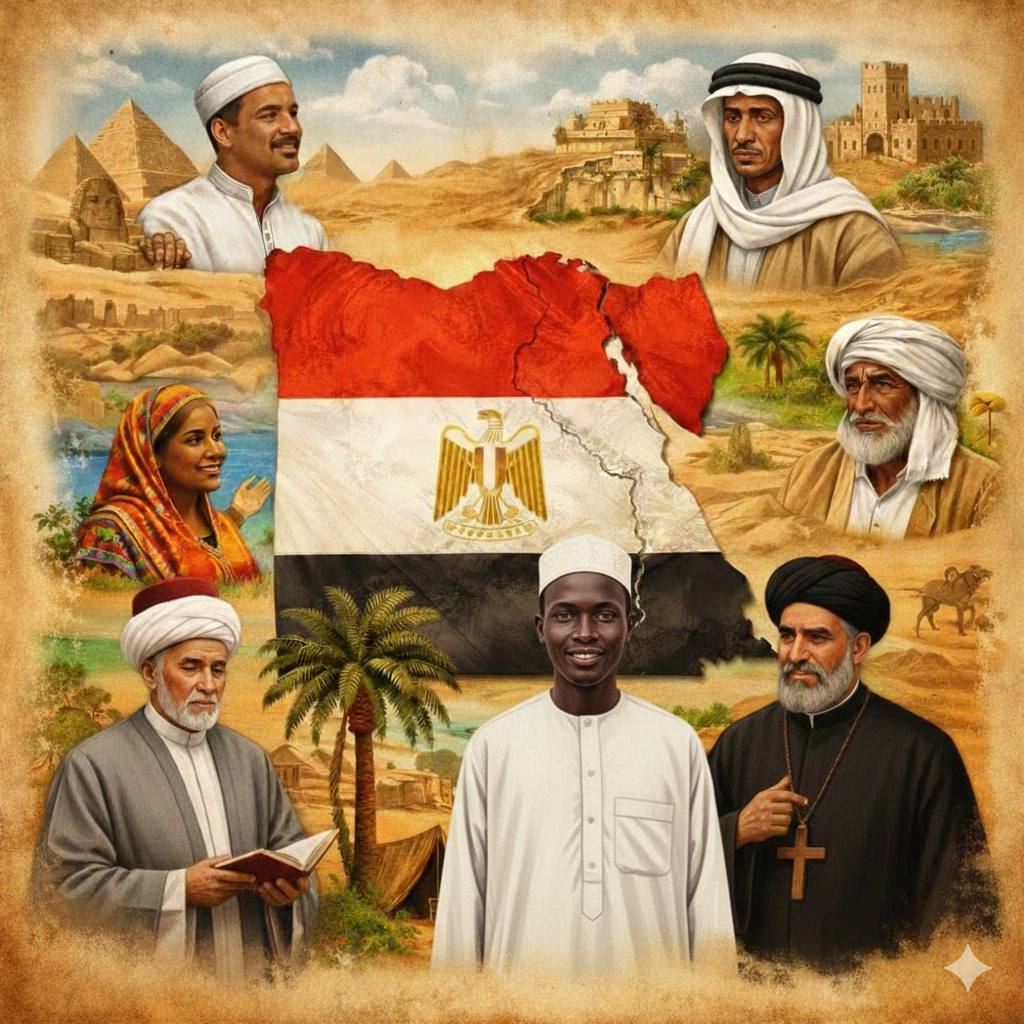
Egypt… When Diversity Becomes the Source of GreatnessIt is known to all, near and far, that Egypt is not a nation shaped by geography alone, but a grand human story written by centuries of diversity and uniqueness, where identities have coexisted not as contradictions, but as richness. Since the dawn of history, Egypt has never been a single voice; it has always been a vast human chorus of many layers and multiple melodies, where dialects, customs, colors, and religions intertwine to create a unique character found nowhere else but here.
In Sinai and the Suez Canal region, its people stand as a living bridge between Egypt and its Arab and Asian surroundings. In their features they carry the solidity of the desert and the dignity of the borders. The people of Sinai are not only guardians of geography, but guardians of identity as well; they understand the true meaning of land, honor hospitality, and embody belonging in its purest form—where the homeland becomes a covenant never to be broken.
In the Nile Delta lives the Egyptian farmer, the maker of the first civilization and the guardian of continuity. Farming is not merely a profession, but a philosophy of life: patience akin to waiting for the flood, and wisdom that knows goodness is born from the land just as hope is born from toil. In his hands, the Egyptian bond with the soil was formed—an ancient love that has never faded despite the passage of time.
As for Nubia, it is an Egyptian poem written in water and stone. Nubians are bearers of a deep civilizational memory, possessing a culture rich in rhythm, color, and language, and embodying humanity’s ability to preserve identity despite challenges. Nubia is not a margin of Egyptian geography, but a heart pulsing with authenticity, tolerance, beauty, and humanity.
In the Siwa Oasis, another Egypt reveals itself—calm and profound, with its own distinct rhythm. The people of Siwa, with their Amazigh culture, language, and customs, add a rare civilizational dimension to Egyptian identity. There, nature reconciles with humanity, and ancient wisdom lives side by side with the spirit of the modern age, without noise or pretense.
Upper Egypt, meanwhile, is the backbone of the nation, the reservoir of authentic values: chivalry, dignity, honor, and loyalty. The people of Upper Egypt have carried Egypt on their shoulders in times of hardship, enriching it with intellect, labor, and conscience. The rhythm of life there may differ, but it remains more sincere and more deeply rooted.
Religious diversity further affirms that Egypt is a homeland spacious enough for all. And no one forgets the words of Pope Shenouda III, Pope of Alexandria: “Egypt is a homeland that lives within us.”
Muslims and Christians have lived for centuries in a human partnership before it was ever a political one. They shared bread, sorrow, and joy, and together built a history of coexistence that is rarely matched. A church beside a mosque is not merely an architectural scene, but a profound expression of a national philosophy that sees difference as a blessing—one that all Egyptians understand.
Even Egyptian Jews, despite their small numbers today, remain an integral part of Egypt’s historical fabric. They contributed to its economy, culture, and arts, leaving clear marks on music, cinema, and commerce. Their historical presence stands as evidence that Egypt has always been, and remains, a refuge for diversity and a haven for difference.
The scene does not end with these components alone. Egypt encompasses countless linguistic, cultural, social, and regional diversities—from the Bedouins of the Western Desert to the people of the coastal cities, from urban to rural life, from deeply rooted antiquity to ever-renewing modernity. Every difference adds a new layer to the Egyptian character and grants it a rare ability to adapt and endure.
Egypt’s true greatness does not lie in erasing differences, but in embracing them; not in imposing a single mold, but in allowing every component to be itself within a unifying national framework. Diversity in Egypt is not a slogan, but a living historical experience—one that has proven that strength is born of plurality, and that true beauty is what brings all colors together without losing balance.
An Important Line
Thus was Egypt… and thus it shall remain: a homeland that grows more radiant as its faces multiply, deeper as its tributaries diversify, and greater and more beautiful as it embraces its people in all their differences. Praise be to Allah for the blessing of Egypt.